Preschool vs. Pre-K
Preschool and Pre-K can look similar, but they are not always the same. The biggest difference is usually age and focus: preschool often builds early social and learning habits, while Pre-K is usually the year before kindergarten and may be more focused on kindergarten readiness.
A quick verdict
If your child is around 3, many families start with preschool. If your child is 4 and will go to kindergarten next year, Pre-K may be the better fit.
But names can be confusing. One program may call itself preschool even if it serves 4-year-olds. Another may call itself Pre-K but still use lots of play. It depends on the program, the teacher, and your child's age.
The best next step is to ask what age group the class serves, what a normal day looks like, and how the program prepares children for the next stage. If you want help comparing options, you can get matched, free.
- Preschool often serves ages 3 to 4
- Pre-K often serves ages 4 to 5
- Pre-K is usually the year right before kindergarten
Preschool vs. Pre-K at a glance

Here is the simple version. Preschool is a broad word for early-childhood programs before kindergarten. Pre-K means pre-kindergarten, and it usually refers to the last year before kindergarten.
Some schools offer both. Some offer only one. Public school Pre-K, Head Start, private preschool, faith-based programs, and home-language programs can all use different names. That is why it helps to compare the actual class, not just the label.
- Age: Preschool is often for 3- and 4-year-olds. Pre-K is often for 4-year-olds turning 5.
- Goal: Preschool builds early routines, play skills, and social skills. Pre-K often adds more kindergarten-readiness work.
- Schedule: Both can be part-time or full-time. It depends on the program.
- Cost: Private programs may charge tuition. Some public Pre-K or Head Start options may be low-cost or free if your family qualifies.
How the teaching style can differ
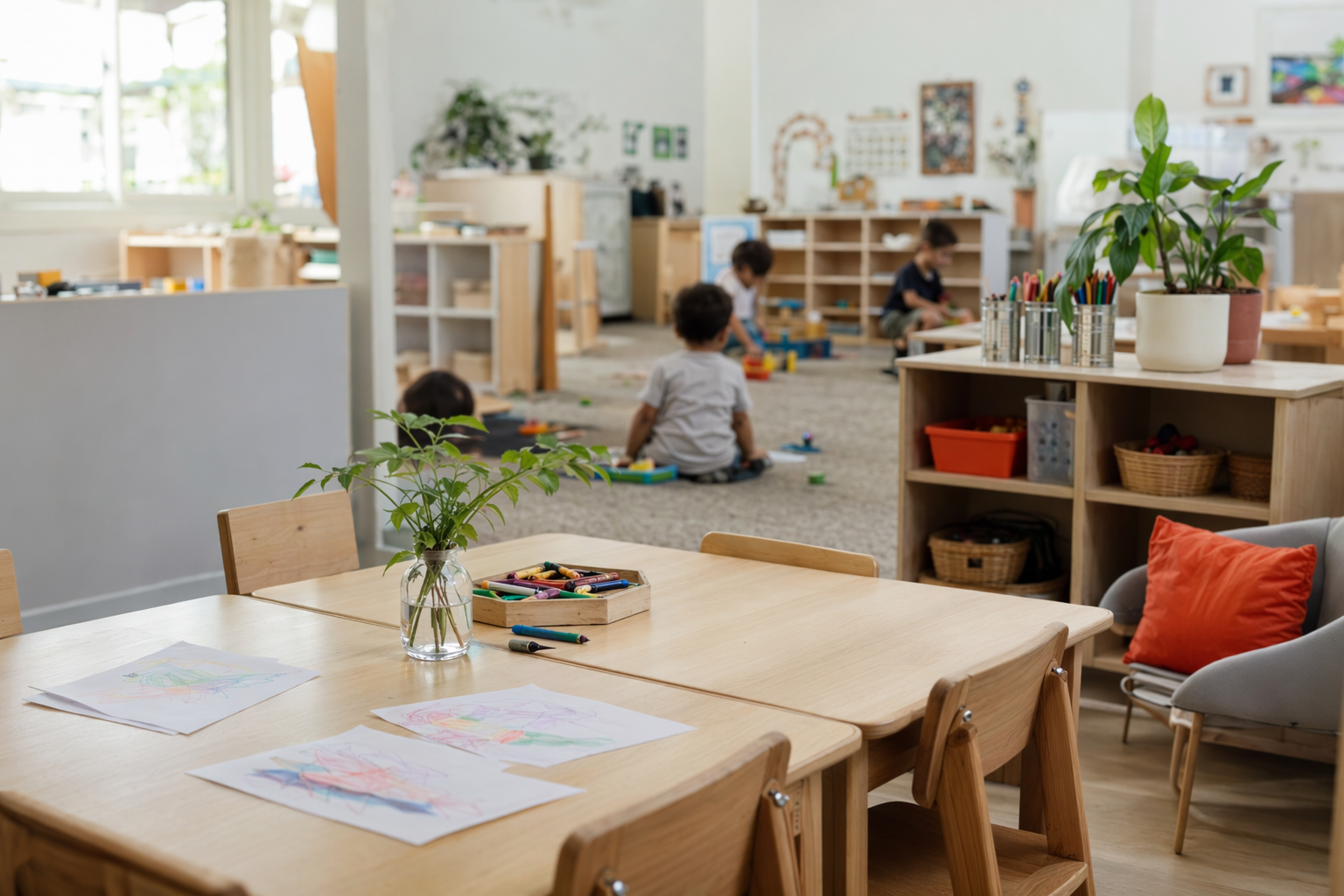
Many preschool classes focus on learning through play. Children may build with blocks, paint, sing, listen to stories, and practice sharing. Teachers are still teaching important skills, but the learning may feel less formal.
Pre-K may also use play, but it often has a stronger focus on skills children use in kindergarten. That can include longer group time, early letter and sound practice, counting, following directions, and doing simple activities more independently.
Still, there is a lot of overlap. A strong preschool can prepare a child very well for kindergarten. A strong Pre-K can still be warm, playful, and gentle. If teaching style matters to you, ask whether the class is play-based, academic, bilingual, or follows a specific approach like play-based preschool or Montessori preschool.
What daily life may look like
In preschool, the day may include free play, snack, outdoor time, circle time, stories, nap or quiet time, and simple art or sensory activities. Teachers often spend a lot of time helping children with routines like washing hands, taking turns, and joining group activities.
In Pre-K, the day may look a little more structured. Children may still play a lot, but there may be more teacher-led activities and more practice sitting for short lessons. Some Pre-K classrooms also work on school routines like lining up, listening for instructions, and finishing small tasks.
If your child is shy, very active, new to English, or still learning group routines, ask how teachers support that. Families who want a home-language or dual-language setting can also ask about bilingual preschool options.
- Ask: How much time is play time?
- Ask: Is there rest time or nap time?
- Ask: How do teachers help children who are learning English?
Cost and availability
Cost is often one of the biggest differences, but there is no single rule. Many private preschools charge monthly tuition. Some Pre-K programs are also private and charge tuition. Other Pre-K programs, especially public school Pre-K or Head Start, may be free or lower cost for families who qualify.
Hours matter too. A free public Pre-K program may have shorter school-day hours than a private preschool or daycare. If you need care for a full workday, ask about before-care, after-care, and transportation.
It helps to compare total cost, not just tuition. Ask about registration fees, supply fees, meals, late pickup fees, and whether financial help is available. You can read more at costs and help paying for preschool.
Which children may do well in each
Preschool may be a good fit for a younger child who is still getting used to being away from family, joining a group, or following simple routines. It can be a gentle first step into classroom life, especially for children around age 3. If that is your stage, see preschool ages 3 to 4.
Pre-K may be a good fit for a child who is close to kindergarten age and ready for a little more structure. It can work well for children who benefit from practicing classroom routines, early learning habits, and independence before kindergarten. You can compare that stage at Pre-K ages 4 to 5.
But age alone does not decide everything. Some 4-year-olds still need a gentler preschool setting. Some younger children are ready for a more structured class. Your child's personality, language needs, schedule, and past group experience all matter.
How to choose between preschool and Pre-K
Start with four questions: How old is my child now? Will they start kindergarten next year? Do we need part-time or full-time hours? Does my child do better with more play, more structure, or a mix?
Then visit programs in person if you can. Watch how teachers speak to children. Ask what the class is trying to help children learn this year. Ask how they support families who speak another language at home. A simple tour can tell you more than a label.
Before you decide, verify the program's state license yourself and review the details carefully. Cubby Road is a free matching service, not a preschool or daycare, so families should always confirm information directly with each program. These guides can help: how to choose a preschool, questions to ask on a tour, preschool tour checklist, and how to check a preschool license.
If you feel stuck, that is normal. Many families compare more than one option. You can get matched, free and we can help you make a short list based on your schedule, budget, language, and location.
- Choose the class based on the real day, not just the name
- Visit in person if possible
- Verify the state license yourself before enrolling
Common questions
Is Pre-K better than preschool?
Not always. Pre-K is not automatically better. It may be a better fit for a 4-year-old going to kindergarten soon, but some children do better in a preschool class with more play.
Can a 3-year-old go to Pre-K?
Usually no, but it depends on the program. Many Pre-K classes are for children who are 4 by a certain date. Always ask the program about age cutoffs.
Is Pre-K free?
Sometimes. Some public Pre-K or Head Start programs may be free or low-cost if your family qualifies. Private Pre-K often charges tuition.
What if my child is learning English?
Ask how the program supports multilingual children and whether staff speak your home language. A bilingual or welcoming play-based setting can help many children feel more comfortable.