Daycare & Child Care Centers
Daycare and child care centers care for children for longer parts of the day, often while parents work or study. Some centers also include preschool learning, but every program is different, so it helps to ask what a normal day really looks like.
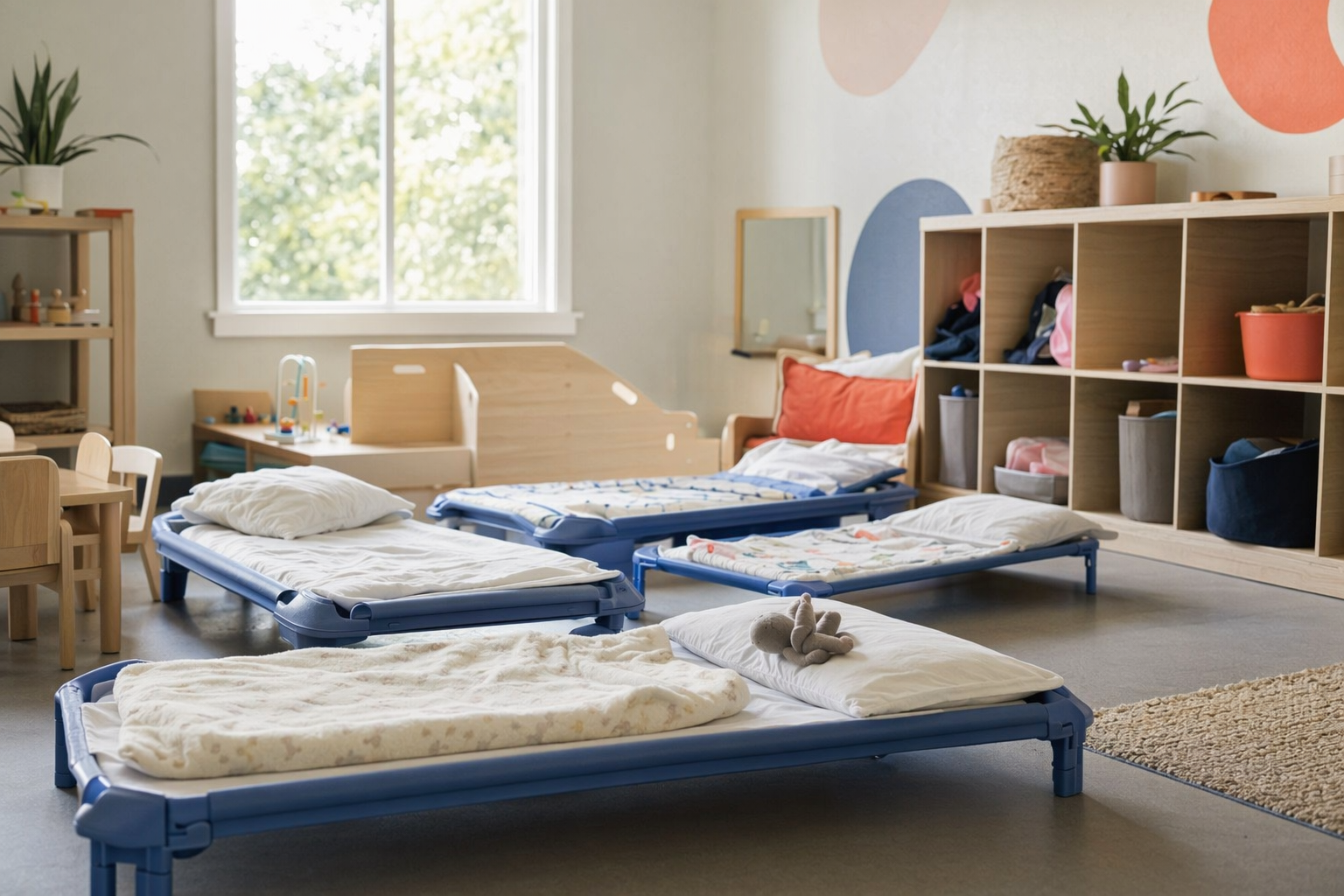
What daycare and child care centers are
A daycare or child care center is a group setting that cares for children during the day. Many centers serve infants, toddlers, and preschool-age children. Some focus mostly on care and routines. Others also include early learning, like story time, songs, counting, art, and outdoor play.
Parents often ask if daycare and preschool are the same. Sometimes they overlap, but they are not always the same thing. Daycare usually means longer-day care for working families. Preschool usually means a school-like program for ages 3 to 5, often with shorter hours. You can read more in Preschool vs. Daycare.
Some centers offer full-time care, part-time care, or before-school and after-school hours. Hours, ages served, teaching style, and price can vary a lot. If you want help comparing options, Cubby Road can get you matched for free.
What a typical day can look like

A full-day child care center usually has a predictable routine. Children may arrive in the morning, eat breakfast or a snack, play indoors, go outside, eat lunch, rest, and have more play or learning activities later in the day. Babies and young toddlers usually follow their own sleep and feeding schedule, while older children often follow a class schedule.
In many centers, the day includes both care and learning. For example, a preschool-age class might have circle time, books, music, simple science activities, and free play. A toddler class may focus more on language, movement, routines, and social skills like taking turns.
Ask for a sample daily schedule when you tour. This helps you see if the program fits your child and your family schedule.
- Infant rooms often focus on feeding, naps, tummy time, and safe play.
- Toddler rooms often focus on routines, language, movement, and simple group activities.
- Preschool rooms may include early math, letters, pretend play, art, and outdoor time.
What ages it fits best
Child care centers can work for many ages, especially if your family needs care for most of the workday. Some centers start with babies as young as 6 weeks or a few months old. Others begin at age 1, 2, or 3. If you are looking for a specific age group, see infant daycare, toddler daycare, twos programs, and preschool for ages 3 to 4.
This option can also be helpful if you want one place for siblings of different ages. Some families like staying in one center for several years. Others move from daycare to a more part-time preschool later. It depends on your child, your work hours, and your budget.
If your child is age 3 or 4, you may also want to compare daycare centers with Head Start and public pre-K or other program types.
Pros and honest trade-offs
A big benefit of daycare is longer coverage during the day. This can make work, school, or shift schedules easier. Many centers are open year-round and offer meals, naps, and a steady routine. Children also get time with other kids, which can help with social skills.
There are trade-offs too. Full-day care usually costs more than a short preschool program. Some centers have larger groups or less outdoor space than families want. Staff changes can happen. And a center may be warm and caring, but still not be the right fit for your family values, language needs, or daily schedule.
If keeping your home language matters to you, ask how teachers support it. Some families prefer bilingual preschool or a play-based classroom. Others want a more academic approach. There is no one best choice for every family.
- Good for: families who need longer hours, care for younger children, or one place for siblings
- May be harder if: the cost is high, the commute is long, or the program style does not match what you want
How to tell a good center apart
First, make sure the center has a current state license, if your state requires one. Licensing means the program meets basic state rules. It does not mean every licensed center is the same quality. Always verify the license yourself and visit in person. This guide can help: How to Check a Preschool License.
When you visit, look at what children and teachers are doing. Do teachers speak kindly? Do children seem engaged? Are rooms clean and organized? Is there enough space for play, rest, and diapering or toileting? Ask about teacher-child ratios, which means how many children each adult cares for. Lower ratios often mean more attention for each child. Learn more in Understanding Teacher-Child Ratios.
Also ask about communication. Will they share daily updates? Is there support for families who speak another language? How do they handle naps, meals, behavior, and transitions? Small details matter because they affect your child every day.
What to ask on a tour
A tour is your chance to see the center with your own eyes. Try to visit when children are there, not only after hours. Watch how adults talk to children. Listen to the noise level. Look at the bathrooms, diapering area, nap space, and outdoor area.
You do not need to ask every question at once. Start with the basics that matter most to your family. A simple checklist can help you stay calm and remember what you saw. You can use this tour checklist or these tour questions.
- What ages do you serve, and what are your hours?
- What is the daily schedule for my child's age group?
- Are meals, snacks, diapers, or supplies included?
- What languages do teachers speak?
- What is your current waitlist, and how does the application process work?
- How should I verify your current state license?
How daycare compares on cost
Daycare and full-day child care often cost more than part-time preschool because the hours are longer and care may be year-round. Infant care is often the most expensive. Toddler care is also usually high. Costs can change a lot by city, age group, schedule, and whether meals or extended hours are included. See general examples on our costs page.
Ask each center for the full price, not only tuition. You may also need to ask about registration fees, supply fees, late pickup fees, and summer charges. If a center has a waitlist, ask whether there is a fee to join it and whether that fee is refundable.
Some families can get help paying. This may include state child care assistance, public programs, employer benefits, or local scholarships. Start with Help Paying for Preschool. If you want a shorter-day option, compare with part-time vs. full-time preschool.
How Cubby Road can help
Cubby Road is a free matching service for families in the United States. We are not a daycare or preschool, and we do not run programs. We help parents and guardians find options that may fit their needs, like location, schedule, budget, language, and age group.
If you want, you can get matched, free or learn how it works. We only ask for a parent or guardian's contact information and what you are looking for. After you get matches, it is still important to tour programs in person, ask questions, and verify the state license yourself before you decide.
Common questions
Is daycare the same as preschool?
Not always. Daycare usually means longer-day care, while preschool often means a learning program with shorter hours. Some centers offer both.
What age can a child start daycare?
It depends on the center. Some take infants, and some start later. Always ask what ages they serve and whether they have space.
How do I know if a center is licensed?
Ask for the license information and verify it with your state yourself. Licensing rules are different in each state.
Can Cubby Road enroll my child in a program?
No. Cubby Road is a free matching and guide service for parents and guardians. We help you find options, but each program handles its own admissions.