Toddler Programs (1–2 years)
Toddlers are busy, curious, and still very young. A good toddler program gives them close supervision, simple routines, time to move, and warm teachers who help with big feelings, early words, and daily care.
What children age 1 to 2 usually need
At this age, children learn with their whole body. They climb, carry, throw, copy adults, and test limits. They also need help with eating, sleeping, diapering or toilet learning, and calming down after they get upset.
Most toddlers do best with a predictable day. That can mean arrival, free play, snack, outside time, lunch, nap, and pickup in a similar order each day. The routine does not need to be strict, but it should feel steady.
Language grows fast at this age, even if a child is not speaking much yet. Good programs talk with children all day. Teachers name objects, describe actions, sing songs, read short books, and repeat simple words. If your family speaks another language at home, that is a strength. You can read more in keeping your home language and bilingual preschool.
- Look for lots of movement, not long periods sitting still
- Look for teachers who speak kindly and get down at the child's eye level
- Look for simple routines children can learn over time
What a good toddler room can look like

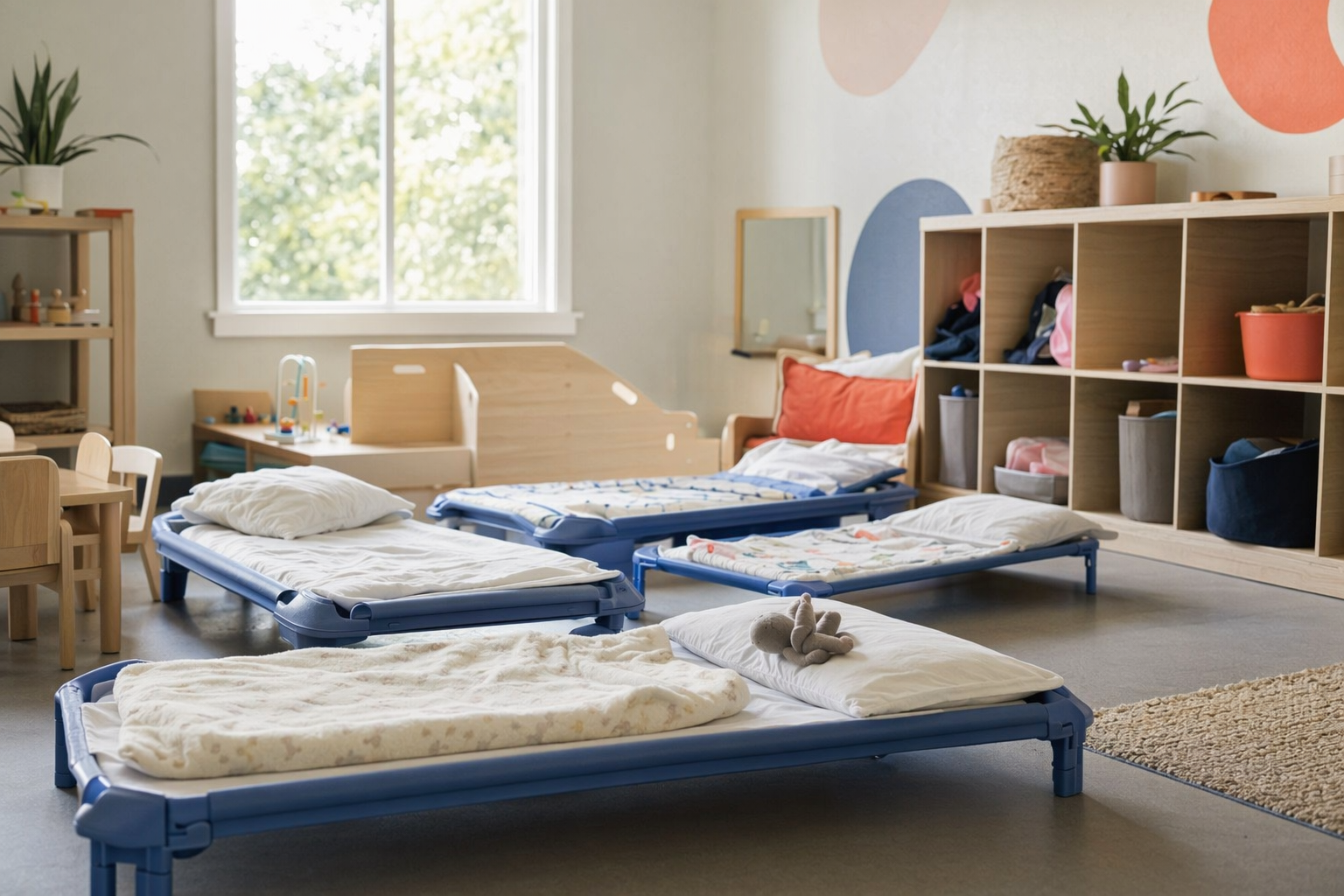
A strong toddler room usually feels calm but active. You may see low shelves, sturdy toys, board books, blocks, pretend-play items, child-sized tables, and a safe place for climbing or gross motor play. Gross motor means big body movement like walking, pushing, climbing, and dancing.
Teachers should be nearby and engaged, not only watching from across the room. They may help children take turns, label feelings, and redirect behavior. Redirect means gently moving a child to a safer or better choice, like offering a ball instead of letting them throw blocks.
Toddler learning should be hands-on. Expect sensory play, music, art with simple materials, outdoor time, and short group moments. Be careful if a program expects toddlers to do worksheets, sit still for long lessons, or act like older preschoolers. You can compare program styles in play-based preschool, Montessori preschool, and daycare and child care.
- There should be enough toys for children to use without constant fighting
- Furniture and materials should fit toddler size
- Outdoor play should happen often if weather allows
Potty training, diapers, and language support
Many parents worry that a toddler must be potty trained before starting. Often, that is not true for this age. Some programs help with diapering and toilet learning. Others have their own rules, especially as children get closer to age 2 or move into an older class. Ask directly what support they give and what they expect from families.
Toilet learning should be gentle and realistic. Good signs are regular bathroom routines, respectful diapering, and teachers who do not shame accidents. If a program says all toddlers must be fully trained very early, ask how they handle children who are not ready yet.
If your child is learning English, ask how teachers support communication. A good answer may include picture labels, songs, repeating key words, and respect for the home language. Some programs have bilingual staff, but even if they do not, teachers can still support multilingual children well. Our immigrant family preschool guide may help with what to ask.
- Ask how often diapers are changed
- Ask where children nap and how teachers soothe children who are upset
- Ask how teachers communicate with families who prefer another language
Ratios, supervision, and safety questions to ask
For toddlers, teacher-child ratio matters a lot. Ratio means how many children each adult is responsible for. Lower ratios often mean more attention, but rules are different in each state. Group size also matters. A room with a legal ratio can still feel crowded if too many children are together.
Ask the program what their toddler ratio is, what the maximum group size is, and whether that changes during early drop-off, lunch breaks, or late pickup. You can learn more in understanding teacher-child ratios.
You should also ask about gates, playground supervision, sleep checks, cleaning routines, and how they handle biting, climbing, and children opening doors. Cubby Road is a free matching service. We do not inspect programs or verify quality. Always visit in person and check the state license yourself with how to check a preschool license. A tour checklist can also help: preschool tour checklist.
- What is your toddler ratio and group size?
- How do you supervise outdoor play and nap time?
- How do you handle biting or unsafe behavior?
- Can I see your current state license information?
How to judge if a program is a good fit for your family
Fit is not only about curriculum. It is also about schedule, location, language, price, and how welcome you feel. Some families need full-day care. Others want part-time. Some want a home-like setting. Others want a school-like routine. You can compare options in preschool vs daycare and part-time vs full-time preschool.
During a visit, watch the children and adults more than the marketing words. Do teachers comfort children kindly? Do toddlers seem engaged? Is the room reasonably clean and organized? Are families greeted with respect? If something feels rushed, harsh, or chaotic, ask more questions.
Price and availability also matter. Infant and toddler care is often expensive, and waitlists are common in many areas. It depends on your city, schedule, and program type. See costs, help paying for preschool, and preschool waitlists explained. If you want help finding options, you can get matched, free. We ask for a parent or guardian's contact information and what you are looking for, then help you find programs to contact.
- Think about commute time and pickup rules
- Ask whether meals, naps, and outdoor time fit your child's needs
- Notice whether staff answer your questions clearly
Common worries parents have at this age
It is normal to worry that your child is too young, too shy, not talking enough, or not ready to separate from you. Many toddlers cry at drop-off at first. Some adjust in a few days. Others need a few weeks. Ask the program how they support a gradual transition and how they communicate with families during the first weeks.
Parents also worry about illness, biting, and behavior. These things can happen in group care, especially with toddlers who are still learning to communicate and share space. What matters is how adults respond. Ask for clear, calm explanations of their policies.
One family told us they were afraid their child would lose their home language after starting care. They chose a program that welcomed family culture, used visual supports, and encouraged the parents to keep speaking their language at home. The child learned new English words and kept growing in the home language too. You can also review questions to ask on a tour before you visit programs.
- A slow adjustment does not always mean the program is wrong
- Toddlers often need time before they feel secure with new adults
- Clear communication between staff and family helps a lot
Common questions
Does my toddler need to be potty trained?
Usually not for a younger toddler room, but each program has its own rules. Ask exactly what help they give with diapers and toilet learning.
Is it a problem if my child does not speak much English?
Not necessarily. Many toddlers are still learning language in general. Ask how teachers support multilingual children and whether they respect your home language.
What ratio is good for toddlers?
Lower ratios are often better, but legal limits depend on the state. Ask both the ratio and the total group size, then verify the license yourself.
Can Cubby Road tell me which program is safest or guarantee a spot?
No. Cubby Road is a free matching and guide service. We can help you find options, but families should visit in person, ask questions, and check the state license themselves.