Bilingual & Dual-Language Preschools
Bilingual and dual-language preschools use two languages during the school day. For many families, they can help a child learn English while also keeping the home language strong.
What bilingual and dual-language preschool means
These programs teach children in two languages. Often that means English plus another language such as Spanish, Mandarin, Arabic, or French. Some schools call this bilingual. Some call it dual-language. The exact model can be different from one program to another.
In one program, a teacher may speak mostly one language in the morning and another in the afternoon. In another, one teacher uses English and a second teacher uses the partner language. Some programs aim for a 50/50 split. Others use more English and less of the second language.
A bilingual preschool is not about making children translate all day. Good programs use songs, stories, play, routines, and pictures so children understand naturally. If you are comparing options, it helps to also look at other styles like play-based preschool or Montessori preschool, because language approach and teaching style are not the same thing.
Will two languages confuse my child?
Usually, no. Young children can learn more than one language at the same time. It is normal if they mix words from both languages for a while. That does not usually mean there is a problem. It is often a normal part of learning.
Some children may speak less at first in a new setting, especially if they are hearing a new language. That can happen in any preschool. Over time, many children begin to understand routines, join play, and use more words in both languages.
What matters most is consistent, warm interaction. Children learn language from hearing it often, using it in real life, and feeling safe enough to try. If you want ideas for home, see keeping your home language.
What a typical day can look like
A typical day may look a lot like other preschools. Children usually have free play, circle time, outdoor play, books, music, snack, and rest. The difference is that teachers use two languages on purpose during these routines.
For example, a teacher might greet children in both languages, read one book in English and another in the partner language, and use simple repeated phrases during clean-up and lunch. Good programs do not only teach vocabulary lists. They help children connect language to real activities.
You may see things like:
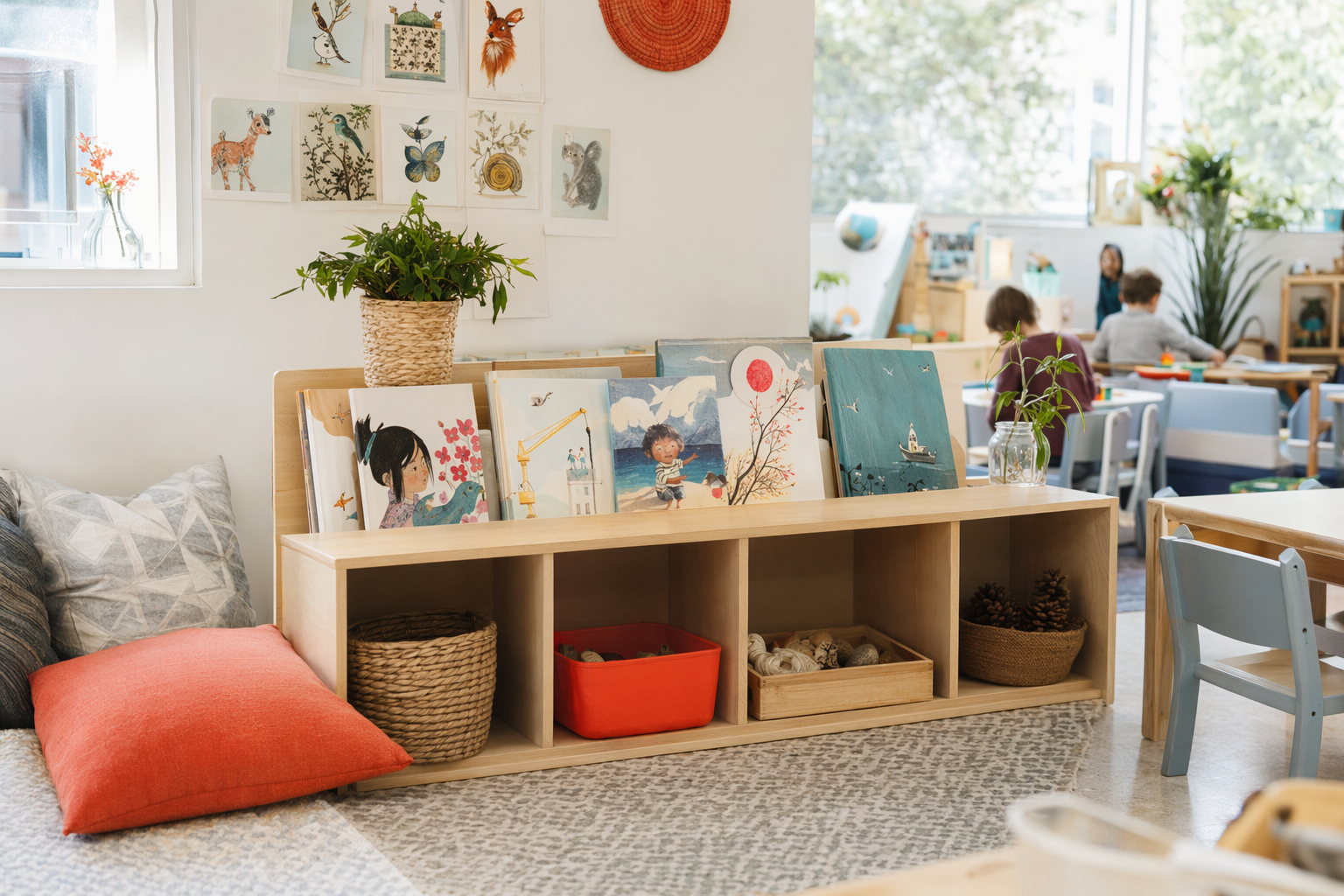
- labels in two languages
- songs and finger plays in both languages
- teachers repeating key phrases slowly and clearly
- visual schedules, pictures, and gestures to help children understand
If your child is younger and needs longer care hours, you may also want to compare with daycare and child care or age-based options like toddler care and preschool for ages 3 to 4.
What ages it can fit best
Bilingual programs can work for many ages, from toddlers through pre-K. There is no one perfect age to start. Some children begin very young in child care. Others start at age 3 or 4 in preschool.
For younger children, the focus is usually listening, routines, play, and comfort. For older preschoolers, there may be more group learning, stories, and early literacy in two languages. The right fit depends on your child's age, personality, schedule, and how much support the program gives to new learners.
If you are not sure what is common at your child's age, you can compare options on ages or read preschool vs. daycare.
Benefits and honest trade-offs
Many families choose bilingual preschool because they want two things at once: help with English and respect for the home language. A strong program can support both. It may also help a child feel proud of their family language and culture.
There are also trade-offs. Bilingual programs can be harder to find, especially in some cities or for certain languages. Hours may be shorter than full-day child care. Some have waitlists. In some programs, the second language is used less than families expected, so it is important to ask specific questions.
A few honest points to keep in mind:
- progress is not always fast or easy to see week by week
- language balance may change based on staffing and class mix
- your home language still matters a lot, even with a good program
- cost can vary a lot depending on location, hours, and whether the program is private, public, or community-based
How to tell a strong program apart
Look for clear answers, not just marketing words. A strong program should be able to explain exactly how much of each language is used, who speaks which language, and how they support children who are new to one or both languages.
On a tour, watch what children and teachers are actually doing. Do teachers speak warmly and clearly? Do children seem engaged? Are there books, songs, labels, and routines in both languages? Is the classroom calm and organized enough for children to follow what is happening?
You should also verify basics yourself. Visit in person if you can. Check the state license yourself before choosing a program. Cubby Road is a free matching service. We help families find options to contact, but we do not run programs or inspect them. You can use how to check a preschool license, understanding teacher-child ratios, and our preschool tour checklist.
What to ask on a tour
Bring simple, direct questions. You do not need perfect English. You can even show the questions on your phone and ask the staff to answer slowly.
Good questions include:
1. Which two languages do teachers use each day?
2. About how much time is spent in each language?
3. If my child speaks mostly our home language, how will you help them adjust?
4. If my child speaks mostly English, how will you build the second language?
5. Which teachers are fluent in each language?
6. How do you communicate with parents who prefer another language?
7. What are the hours, total monthly cost, and extra fees?
For more help, see questions to ask on a tour and how to choose a preschool.
How cost usually compares
Bilingual preschool is sometimes more expensive than a standard private preschool, but not always. Cost depends on where you live, how many hours you need, the age of your child, and whether the program is private, nonprofit, public, or part of a larger center.
Some public pre-K or community programs may offer language support at lower cost. Private dual-language programs may cost more, especially for full-day care. Ask about registration fees, materials fees, late pickup fees, and whether meals are included.
If budget is a big concern, look at costs and help paying for preschool. If you want help finding options that match your language, schedule, and budget, you can get matched, free or learn how it works.
Common questions
Is it better to speak only English at home if my child will start preschool in English?
Usually no. Keeping your strongest home language is often helpful. Children learn best from rich, natural talk with family.
My child mixes two languages. Is that a bad sign?
Usually not. Mixing words can be a normal part of bilingual development in young children.
Will a bilingual preschool guarantee my child becomes fluent?
No. Language growth depends on the program, how often each language is used, your child's exposure, and time.
Can Cubby Road enroll my child in a bilingual preschool?
No. Cubby Road is a free matching and guidance service. We help parents find programs to contact, but each program handles its own admissions.