Play-Based Preschools
A play-based preschool helps children learn through hands-on activities, conversation, movement, and pretend play. It can look less formal than worksheets, but good programs still build important skills for school and daily life.
What a play-based preschool is
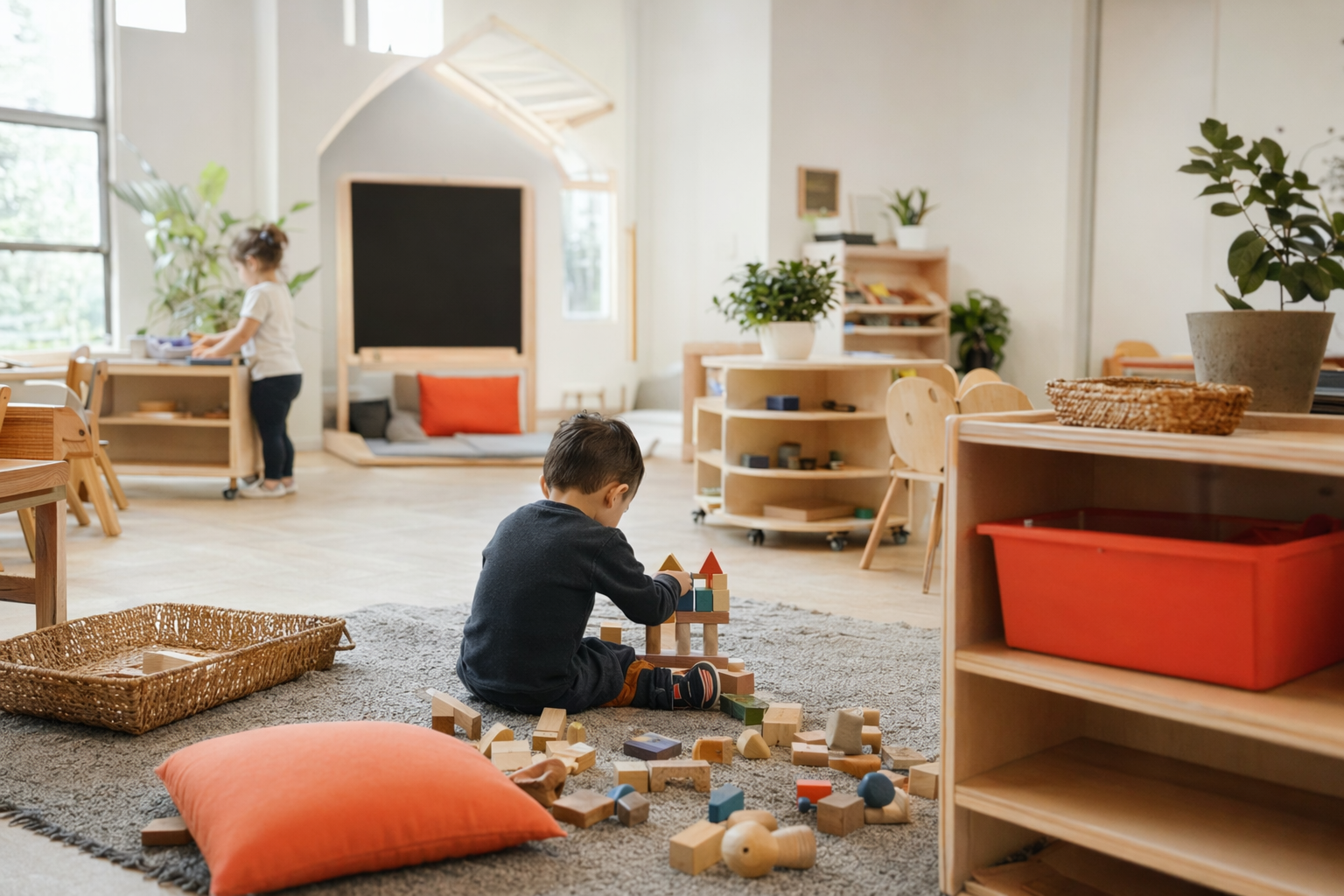
In a play-based preschool, children learn by doing. They may build with blocks, act out stories, paint, sing, dig in sand, sort objects, or play in a pretend kitchen. Teachers guide the learning, ask questions, and set up activities with a purpose.
Play-based does not mean children are "just playing" all day with no plan. A strong program uses play to help children practice language, early math, problem-solving, self-control, and social skills. For example, a child pouring water may be learning hand control, new words, and simple science ideas.
Many families like this approach because it feels natural for young children. It can be especially helpful for multilingual children, who often learn well through songs, routines, pictures, and talking with other children. If you want a program that also supports home language, you may want to compare with bilingual preschool.
- Children learn through games, art, music, movement, and pretend play
- Teachers still plan lessons and watch children’s progress
- The goal is learning that fits how young children grow
What a typical day can look like
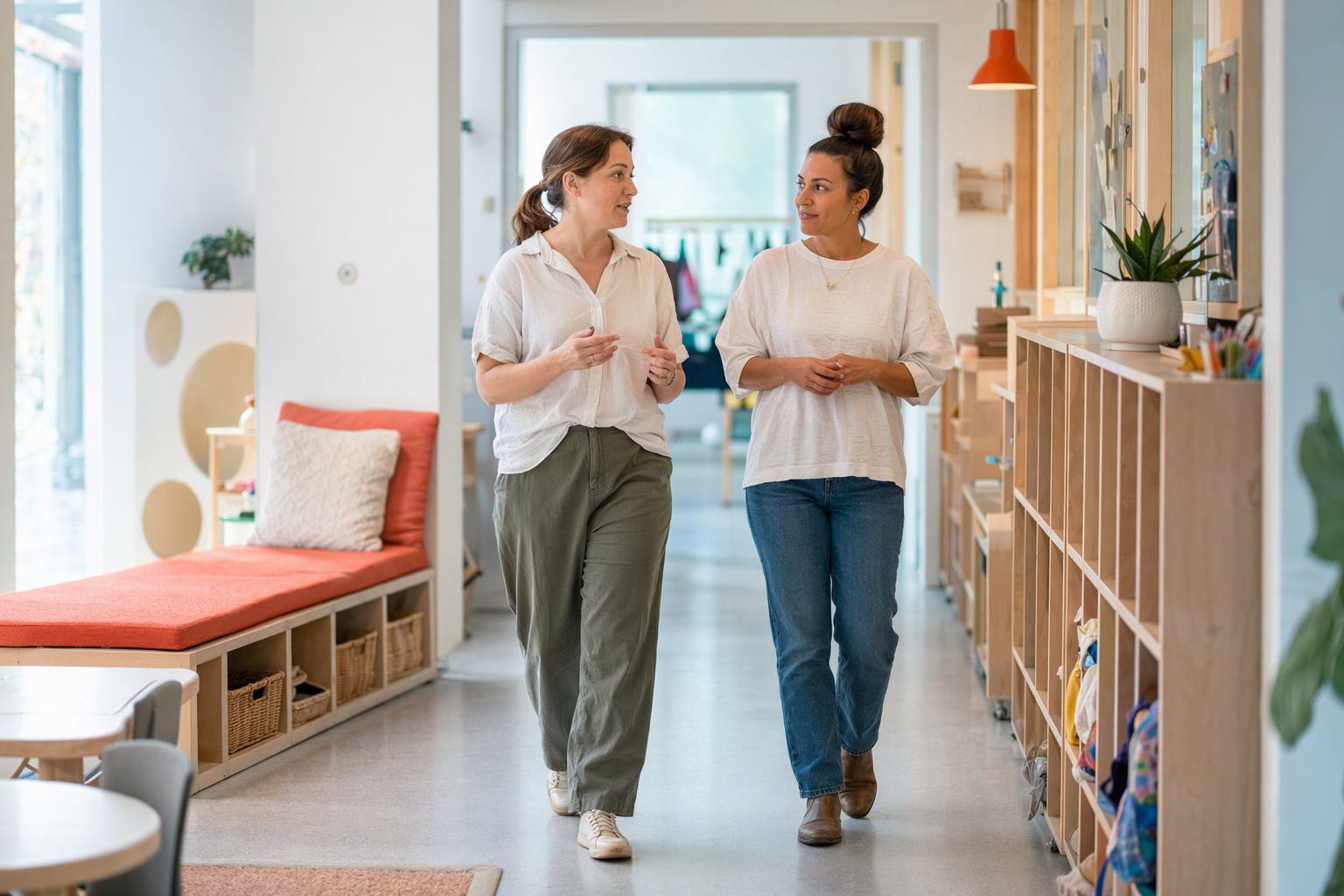
Every program is different, but many play-based preschools follow a simple daily routine. Predictable routines help children feel safe and know what comes next.
A day might include welcome time, free choice centers, circle time, snack, outdoor play, story time, lunch, rest, and small-group activities. During "centers," children choose from areas like blocks, art, books, sensory play, or dramatic play. Teachers move around the room, talk with children, and help extend learning.
Good play-based classrooms usually have a balance. Children get some choice, but there is still structure. There should be enough time for active play and enough support for transitions, especially for younger children.
If you are deciding between a shorter preschool day and longer care hours, part-time vs. full-time preschool and preschool vs daycare can help you compare.
What ages it fits best
Play-based learning is common for ages 2 to 5. It is often a strong fit for toddlers, preschoolers, and pre-K children because young children learn best through active, real experiences. A 2-year-old may learn by touching, moving, and repeating. A 4-year-old may use play to practice stories, counting, sharing, and early writing.
Some daycares for younger children also use a play-based approach. For age-specific options, you can compare twos programs, preschool for ages 3 to 4, and pre-K for ages 4 to 5.
The best age fit depends on your child’s personality, energy level, and daily schedule. Some children do very well with lots of movement and open-ended activities. Others may need a classroom with more direct teacher-led time mixed in.
Benefits and honest trade-offs
A good play-based preschool can support curiosity, confidence, language growth, and social development. Children often practice sharing, taking turns, solving small problems, and using words to express feelings. These are big skills for kindergarten and beyond.
This approach can also reduce pressure on very young children. Instead of sitting still for long periods, they learn through conversation, stories, pretend play, and hands-on materials. Many families feel this makes school more joyful.
There are trade-offs too. Some parents worry that play-based programs may look less academic at first. On a tour, you may not see children doing worksheets or memorizing facts. That does not always mean less learning, but you should ask how the program builds early literacy and math through play.
Another trade-off is that quality varies a lot. One program may be warm, organized, and thoughtful. Another may use the words "play-based" but offer little structure or weak teacher support. That is why it is important to visit in person and ask clear questions.
How to tell a good play-based program apart
Look for teachers who are warm, attentive, and actively engaged with children. In a strong classroom, adults are not just watching from the side. They get down to the child’s level, ask open questions, help children solve conflicts, and encourage language.
The room should feel busy but not chaotic. Materials should be easy for children to reach. You may see books, blocks, puzzles, art supplies, dress-up clothes, sensory tables, and outdoor play equipment. Children should have chances to explore, but routines should still be clear.
It also helps to ask how the program communicates with families, supports behavior, and tracks development. A good program can explain what children are learning during play in simple words. You can also review how to choose a preschool, understanding teacher-child ratios, and how to check a preschool license before you tour.
Cubby Road can help you get matched, free with programs that fit what you are looking for. We are a free guide service for families. We do not run preschools or guarantee admission, so always visit in person and verify the state license yourself.
- Teachers talk with children often, not only give directions
- There is a daily routine, even if children have choices
- The classroom has materials for pretend play, art, books, building, and movement
- Children seem engaged, safe, and supported during transitions
What to ask on a tour
Tours are one of the best ways to see whether a play-based preschool is a real fit. Try to watch how teachers respond when children need help, get upset, or disagree with each other. Those moments tell you a lot.
You can ask questions like these:
1. How do children learn early reading and math here?
2. How much time do they spend outdoors each day?
3. What does a typical day look like?
4. How do you help children who are shy, new to English, or still learning routines?
5. How do you communicate with families?
You may also want to ask about hours, meals, toilet learning policies, and how they handle rest time. Bring your own checklist if that helps. See questions to ask on a tour and our preschool tour checklist for a simple guide.
How play-based preschool compares on cost
Play-based preschool is not always cheaper or more expensive than other types. Cost depends on your city, schedule, age group, and whether the program is part-time, full-time, private, faith-based, community-based, or publicly funded.
In many areas, private preschool costs can vary a lot. A part-time program may cost less each month than full-day care, but it may not work for every work schedule. Some public programs, Head Start programs, and local aid options can lower costs for families who qualify.
If budget is a big concern, start with costs and help paying for preschool. If you want to compare different program styles, you can also browse all program types or learn about Head Start and public pre-K.
One family told us they first looked only at price, then changed their mind after visiting in person. They found that the cheapest option was not the best fit for their child’s temperament, but a nearby program with financial help worked better. It really depends on the program and your family’s needs.
Common questions
Will my child still learn letters and numbers in a play-based preschool?
Usually, yes. Good programs teach early literacy and math through stories, songs, games, counting, art, and everyday activities.
Is play-based preschool good for children learning English?
It can be. Play, routines, pictures, music, and conversation often help children learn language in a natural way.
Does play-based mean less discipline or no structure?
Not in a strong program. Good play-based classrooms have routines, teacher guidance, and clear expectations.
Can Cubby Road enroll my child in a play-based preschool?
No. Cubby Road is a free matching and guide service. We help families find options, but each program handles its own admissions and waitlists.