Infant Daycare (6 weeks–1 year)
What infant daycare includes, safe-sleep and ratio rules to ask about, and how to find licensed infant care near you.
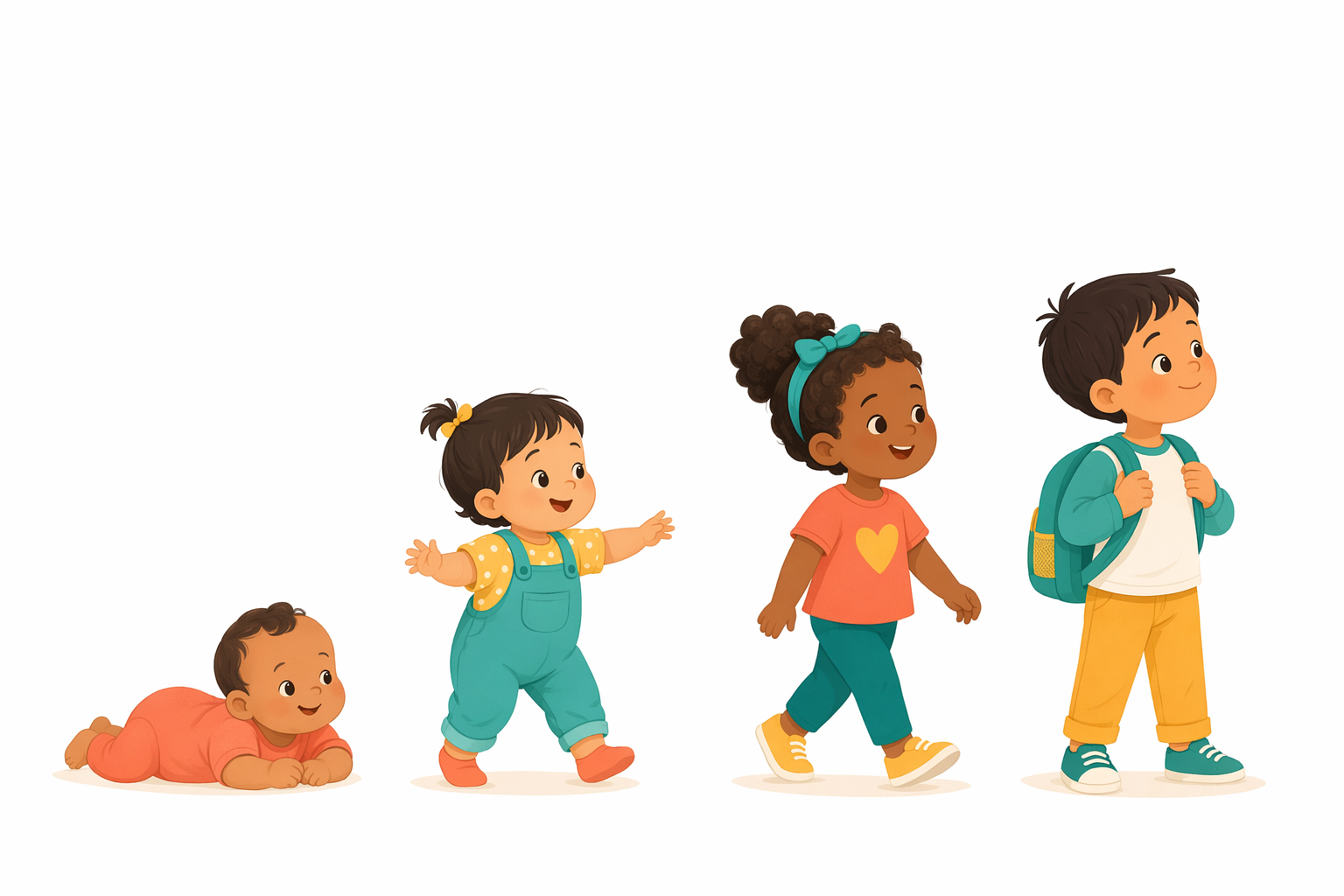
Open →Children need different kinds of care at different ages. This page shows what is common for infants, toddlers, twos, preschoolers, and Pre-K, so you can compare options and [get matched, free](/get-matched/).
What infant daycare includes, safe-sleep and ratio rules to ask about, and how to find licensed infant care near you.
Open →What toddler programs offer, how potty-training and language are handled, and what to look for in a toddler room.
Open →What a good two-year-old program looks like, how it bridges to preschool, and what to expect on a tour.
Open →What preschool teaches 3- and 4-year-olds, how to judge readiness, and how to compare programs for this age.
Open →What Pre-K covers before kindergarten, the difference between public and private Pre-K, and how to find a free or low-cost spot.
Open →A good search starts with two things: your child's age group and your family's schedule. Some families need full-day care while parents work. Others want a part-time preschool program a few mornings each week.
Age matters because programs are often grouped by stage. An infant room is very different from a Pre-K classroom. Teachers, daily routines, play materials, and state rules can all change by age.
If you are not sure what type of program you want, compare program types first. You can also read preschool vs. daycare if the words feel confusing.
Infant care is usually the hardest to find. There are often fewer spots, and many programs have long waitlists. Costs can also be higher because babies need more one-to-one attention.
At this age, families often ask about feeding schedules, naps, tummy time, and how caregivers comfort babies. Some programs follow your home routine as closely as possible. Others use a group routine. It depends on the program.
When you visit, ask how babies sleep, where they sleep, and how caregivers communicate with parents during the day. Always visit in person and check the state license yourself before you choose. For more detail, see infant daycare and how to check a preschool license.
Toddlers learn by moving. They climb, carry, point, repeat words, and test limits. Good toddler and twos programs usually have simple routines, lots of active play, and patient teachers who help with big feelings.
At this age, you may hear about circle time, sensory play, and early social skills. Sensory play means hands-on activities like water, sand, playdough, or finger paint. These help children learn through touch and action.
If your child is around age 2, some programs call the class a twos program. Others place 2-year-olds with younger toddlers or older preschoolers. Ask how children are grouped and what a normal day looks like. Learn more about toddler daycare and twos programs.
For ages 3 to 4, many families start looking for preschool instead of general daycare. Preschool often means a more structured program with play, songs, stories, art, and early school routines. Some are part-day. Some are full-day.
This is also the age when parents begin comparing teaching styles. You may see options like play-based preschool, Montessori preschool, bilingual preschool, or faith-based preschool. Each style can feel different in the classroom.
There is no single best choice for every family. A quiet child may do well in one setting, while another child may love a busy class. Visit, observe, and ask questions. These guides can help: how to choose a preschool and questions to ask on a tour.
Pre-K usually serves children in the year before kindergarten. Programs often focus on group routines, listening, early literacy, early math, and independence. Independence can mean simple tasks like washing hands, putting away a backpack, or following two-step directions.
Some Pre-K programs are private. Others are public or funded, like Head Start and public Pre-K. Rules for age cutoffs, school districts, and income can be different in each area.
If your child is 4, start early. Popular programs can fill quickly. Read more about Pre-K ages 4 to 5, how to apply to preschool, and preschool waitlists explained.
Once you know the age group, compare practical details. A beautiful classroom may not work if the hours do not match your job, or if the commute is too hard. Small details matter a lot for daily family life.
Try to compare the same things at each program. That makes your decision easier and less stressful. Bring a short checklist when you visit.
A simple list to compare:
- hours and calendar
- part-time or full-time options
- language support for your family
- meals, naps, and outdoor play
- tuition and extra fees
- how teachers talk with parents
You can use our preschool tour checklist and understanding teacher-child ratios guide. Teacher-child ratio means how many children each adult is responsible for.
Cubby Road is a free matching and guide service for families in the United States. We are not a preschool or daycare, and we do not run programs. We help parents and guardians look for options that may fit their child's age, schedule, language needs, and budget.
You share your contact information and what you are looking for. Then we help match you with programs to explore. Admission, price, and availability depend on each program, so always confirm details directly, visit in person, and verify the state license yourself.
If cost is a big concern, start with costs and help paying for preschool. If you are ready, get matched, free or learn how it works.
Get matched, free, with preschool and daycare programs near you, in your language. We never ask about your child — you visit, compare, and choose who to enroll with.