Programs for Two-Year-Olds
Two-year-olds are growing fast. A good program gives them warm care, simple routines, lots of play, and gentle practice being with other children before the preschool years.
What two-year-olds usually need
At age two, many children are learning to use more words, follow short directions, and handle big feelings. They still need close adult support. They often move between wanting independence and needing comfort a few minutes later. That is normal.
A strong two-year-old program understands this stage. Teachers do not expect children to sit still for long. Instead, the day includes play, snack, outdoor time, music, books, rest, and help with transitions like cleaning up or washing hands.
This age is also a bridge. Some families choose a daycare setting, and some choose an early preschool-style class. Both can work. What matters most is that the program fits your child and your family schedule. If you are comparing options, preschool vs. daycare can help.
- Short activities with movement
- Simple routines repeated every day
- Warm teachers who comfort children quickly
- Play with language, songs, books, and hands-on materials
What a good program at this age looks like

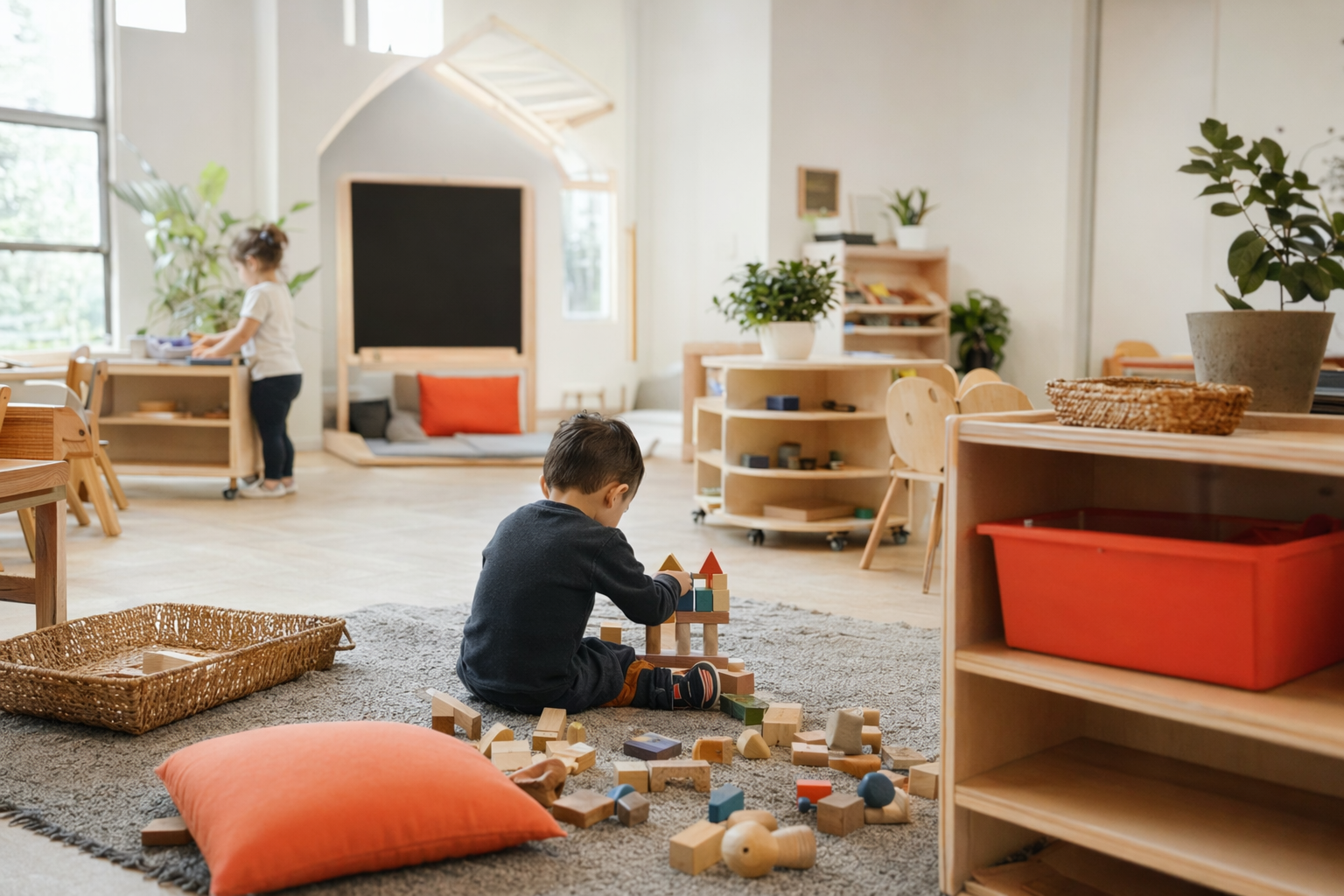
Look for a room that feels calm, busy, and organized. Children should have space to move safely. You may see blocks, pretend play, puzzles, art, sensory play, and books within reach. The goal is not worksheets. The goal is learning through play and daily routines.
Good programs for twos help children practice early social and self-help skills. That can include waiting for a turn, using words or signs to ask for help, washing hands, putting toys away, and trying to eat at a table with others. Toilet learning may be supported, but many good programs do not require full potty training for this age. Policies depend on the program, so ask directly.
A good class also supports language growth. Teachers may name objects, repeat words, sing songs, and talk during play. For multilingual families, it is a plus when staff respect and encourage your home language. If this matters to you, see bilingual preschool and keeping your home language.
Different teaching styles can still be a good fit. Some programs are more child-led and playful. Some are more structured. You can compare play-based preschool and Montessori preschool to learn the difference.
Ratios, supervision, and safety questions to ask
Ask how many children are with each teacher. This is called the teacher-child ratio. Lower ratios usually mean more individual attention, but rules vary by state and by program type. Ask for the exact numbers in the room your child would join, not just the school-wide average. Our guide on understanding teacher-child ratios explains what to listen for.
You can also ask how teachers supervise children during diapering or toileting, meals, nap, outdoor play, and arrival or pickup. These are the times when clear routines matter most. Listen for simple, specific answers.
Always verify the state license yourself. Cubby Road is a free matching service. We help families find options, but we do not run programs or inspect them. Before you decide, visit in person and use how to check a preschool license.
Helpful tour questions include:
- What is the teacher-child ratio in this classroom?
- How do you handle biting, hitting, or big feelings?
- What is your diapering or toileting routine?
- How do you keep doors, gates, and pickup procedures secure?
- How often do children go outside?
- What happens if a child is crying at drop-off?
How to tell if the program is a good fit for your family
Fit is more than the classroom. Think about hours, location, cost, language support, meals, naps, and how teachers communicate with parents. A wonderful program may still be the wrong fit if pickup time is impossible for your work schedule or if the communication style does not work for your family.
On a tour, watch how adults speak to children. Do teachers get down to the child's level? Do they sound patient? Are children redirected with calm words instead of shame? Do you see children engaged in play, not just waiting? Our preschool tour checklist and questions to ask on a tour can help you prepare.
Ask about daily reports, parent conferences, and how the program shares concerns. For families reading English as a second language, it is okay to ask, "Can you explain that in simpler words?" It is also okay to ask whether anyone on staff speaks your language. Clear communication matters.
If you want help finding options, you can get matched, free. Cubby Road matches parents and guardians with programs based on what they are looking for. Admission and openings depend on each program, and waitlists are common.
- Visit at the time of day your child would attend, if possible
- Ask about part-time versus full-time options
- Check current tuition and extra fees before you apply
Common parent worries, answered honestly
Many parents worry that age two is too early. It depends on the child, the program, and your family's needs. Some children do very well in a group setting at two. Others need a smaller or slower start. A part-time schedule can sometimes help. See part-time vs. full-time preschool.
Another common worry is speech. A child may be quieter at first, especially in a new language or new setting. That does not always mean there is a problem. Ask how teachers support communication. Do they use songs, gestures, pictures, repetition, and one-on-one interaction?
Parents also worry about tears at drop-off. This is very common at this age. Ask how the program handles separation. A good answer includes a consistent routine, comfort from a teacher, and communication with parents after drop-off if needed. For many children, the first days are harder than the third or fourth week.
Cost is a real concern too. Prices vary a lot by city, schedule, and program type. Some families may qualify for public or community-based help. You can read help paying for preschool and costs for a starting point.
Common questions
Does my two-year-old need to be potty trained?
Not always. Many programs for twos still accept children in diapers or pull-ups. Policies are different, so ask each program directly.
Is a two-year-old program the same as preschool?
Sometimes it is part of a preschool, and sometimes it is more like toddler daycare. The daily schedule, age mix, and teaching style can be different.
What ratio should I look for?
There is no one perfect number for every state. In general, fewer children per teacher means more attention. Ask for the exact classroom ratio and verify the program's state license yourself.
Can Cubby Road enroll my child in a program?
No. Cubby Road is a free matching and guide service for parents and guardians. We help you find options. Each program handles its own tours, applications, and admissions.