Understanding Teacher-to-Child Ratios
Teacher-to-child ratio means how many children one adult is responsible for at one time. In general, lower ratios are better, especially for babies and younger children, because each child can get more attention, help, and supervision.
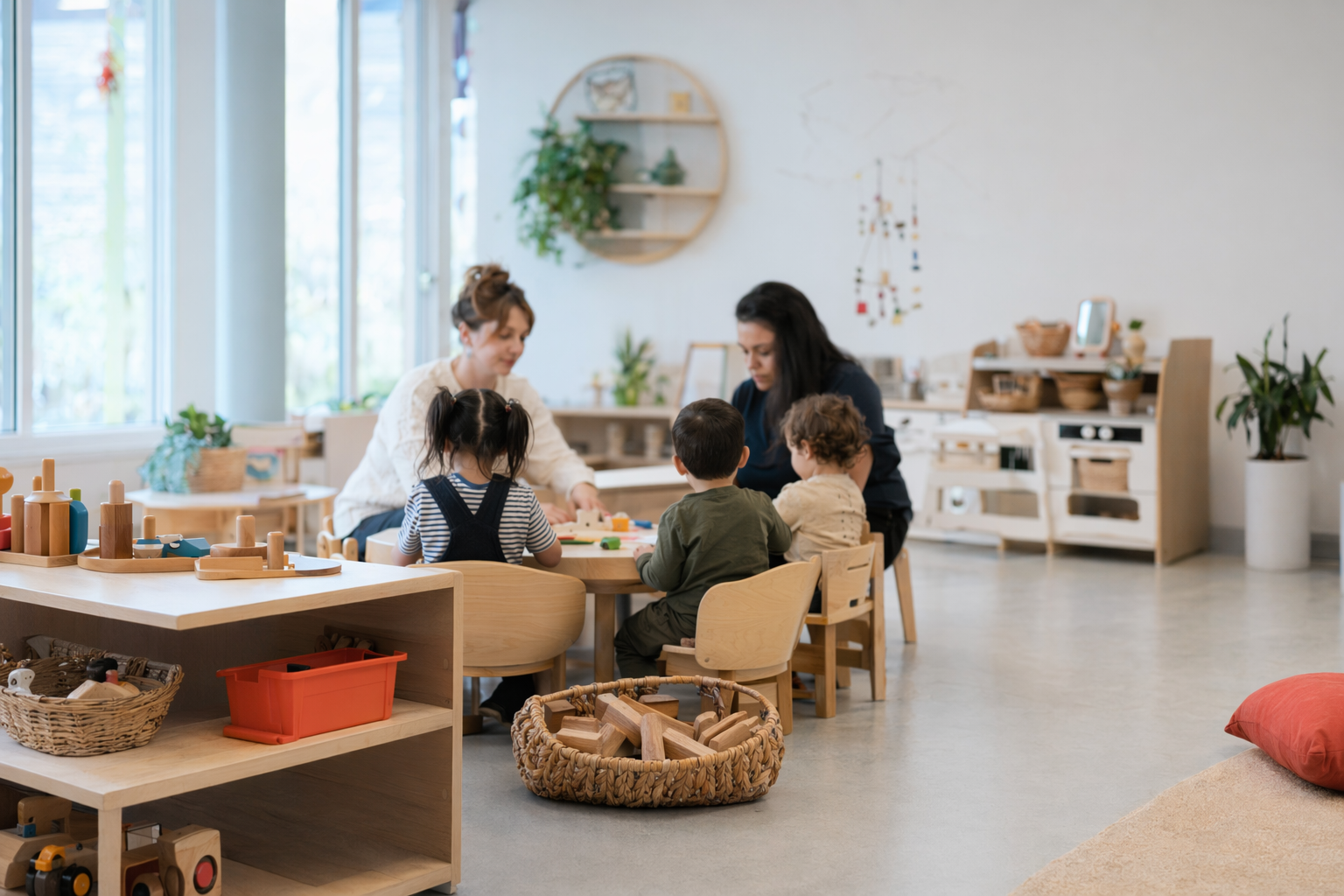
What teacher-to-child ratio means
A ratio is written like 1:4 or 1:10. The first number is the number of adults. The second number is the number of children. So a 1:4 ratio means one adult for every four children.
This is different from group size. Group size means the total number of children in the room. A classroom could have a ratio that meets the state rule, but still feel very busy if the group is large. That is why it helps to ask about both ratio and group size when you tour a program.
Ratios matter because young children need a lot of hands-on care. They need help with eating, bathroom routines, emotions, learning activities, and staying safe. Babies and toddlers usually need much lower ratios than older preschoolers.
- Ratio = how many children each adult has
- Group size = how many children are in the room total
- Both affect how calm, safe, and supported a classroom feels
Why lower ratios are usually better

When there are fewer children per adult, teachers usually have more time for each child. That can mean quicker help with toileting, more talking and reading, and more support when a child is upset or needs extra encouragement.
Lower ratios can also make the day feel calmer. Teachers may have more time to notice problems early, guide behavior, and set up small-group activities. For children who are learning English, shy in groups, or starting school for the first time, that extra adult attention can make a big difference.
But ratio is not the only thing that matters. A program can have a good ratio and still not feel like the right fit. Look at how adults speak to children, whether the room feels organized, and whether families are welcomed. Our guides on how to choose a preschool and questions to ask on a tour can help.
Typical ratios by age
Ratios are set by each state, so the exact rule depends on where you live. There is no one national number for every program. Also, some programs choose lower ratios than the minimum state rule.
Still, many families see a pattern like this: the younger the child, the lower the ratio. These are common examples you might see, but you should always ask the program and verify the state license yourself.
- Infants: often around 1:3 or 1:4
- Toddlers: often around 1:4 to 1:6
- Two-year-olds: often around 1:6 to 1:8
- Preschool age 3 to 4: often around 1:8 to 1:12
- Pre-K age 4 to 5: often around 1:10 to 1:12, sometimes higher depending on the state
If you are comparing ages, these guides may help: infant daycare, toddler daycare, twos programs, preschool for ages 3 to 4, and pre-K for ages 4 to 5.
- State rules set the minimum
- Some programs offer lower ratios than the minimum
- Ask if the ratio changes during early drop-off, late pick-up, nap, or outdoor time
What to ask when you tour
A program may tell you the official ratio, but it is smart to ask how it works in real life. For example, a room may meet ratio on paper, yet one teacher could be changing diapers while the other manages a large group. That can feel very different from what the number alone suggests.
Try to visit when children are actually there. Watch the room for a few minutes. Are children waiting a long time for help? Do adults seem rushed? Are teachers talking warmly with children, or mostly managing behavior?
Good questions to ask include:
- What is the teacher-to-child ratio in this classroom?
- What is the maximum group size?
- How many adults are here during lunch, nap, outdoor play, and bathroom times?
- Do assistant teachers count in the ratio?
- Do you combine age groups early in the morning or late in the day?
- How long do teachers usually stay here?
You can bring our preschool tour checklist or read more questions to ask on a tour.
How ratios connect to quality, cost, and classroom style
Lower ratios often cost more because programs need more staff. That is one reason infant care is usually expensive. If budget is a big concern, read help paying for preschool and costs for more support and examples.
Ratios can also look different by program type. A play-based preschool, a Montessori classroom, a bilingual program, and a full-day daycare may organize staff in different ways. What matters most is whether adults seem engaged, children are supervised, and the classroom runs smoothly for that age group. You can compare options in programs, including daycare and child care, play-based preschool, Montessori preschool, bilingual preschool, and Head Start and public pre-K.
Remember, ratio is one useful sign, not the whole picture. Teacher training, staff turnover, language support, daily routine, and how children are treated all matter too.
How to check the real rule in your state
Do not rely only on a flyer or a quick answer from the front desk. State licensing rules are the official source for minimum ratios and group sizes. Before you choose a program, ask for the license number and check it yourself.
You can also ask whether the program has had any recent licensing issues and whether the classroom you want is currently full. A strong ratio does not guarantee a spot, and a licensed program can still feel like the wrong fit for your child or family.
For step-by-step help, read how to check a preschool license. If you want help finding programs that match what you need, you can get matched, free and learn how it works. Cubby Road is a free guide service for families. We help you find options to consider, but parents should always visit in person and verify the state license themselves.
- Ask for the state license number
- Check the official state record yourself
- Visit in person before you decide
Common questions
What is a good teacher-to-child ratio for preschool?
Usually, lower is better. Many preschool classrooms for ages 3 to 4 are around 1:8 to 1:12, but the exact rule depends on your state and program type.
Is a lower ratio always better?
Usually yes, but it is not the only thing to look at. Also watch how teachers interact with children, how large the group is, and whether the classroom feels calm and organized.
Do ratios stay the same all day?
Not always. Some programs combine rooms at opening or closing time, and staffing may look different during nap, outdoor play, or breaks. Ask how ratios work during the full day.
How can I confirm a program's ratio is legal?
Ask the program about the classroom ratio and group size, then verify the state license yourself. Our guide on [how to check a preschool license](/guides/how-to-check-a-preschool-license/) explains the steps.