Pre-K for 4–5 Year Olds
Pre-K is usually for children ages 4 to 5, in the year before kindergarten. It helps many children practice group routines, early learning skills, and confidence, but programs can look very different, so it helps to compare options carefully.
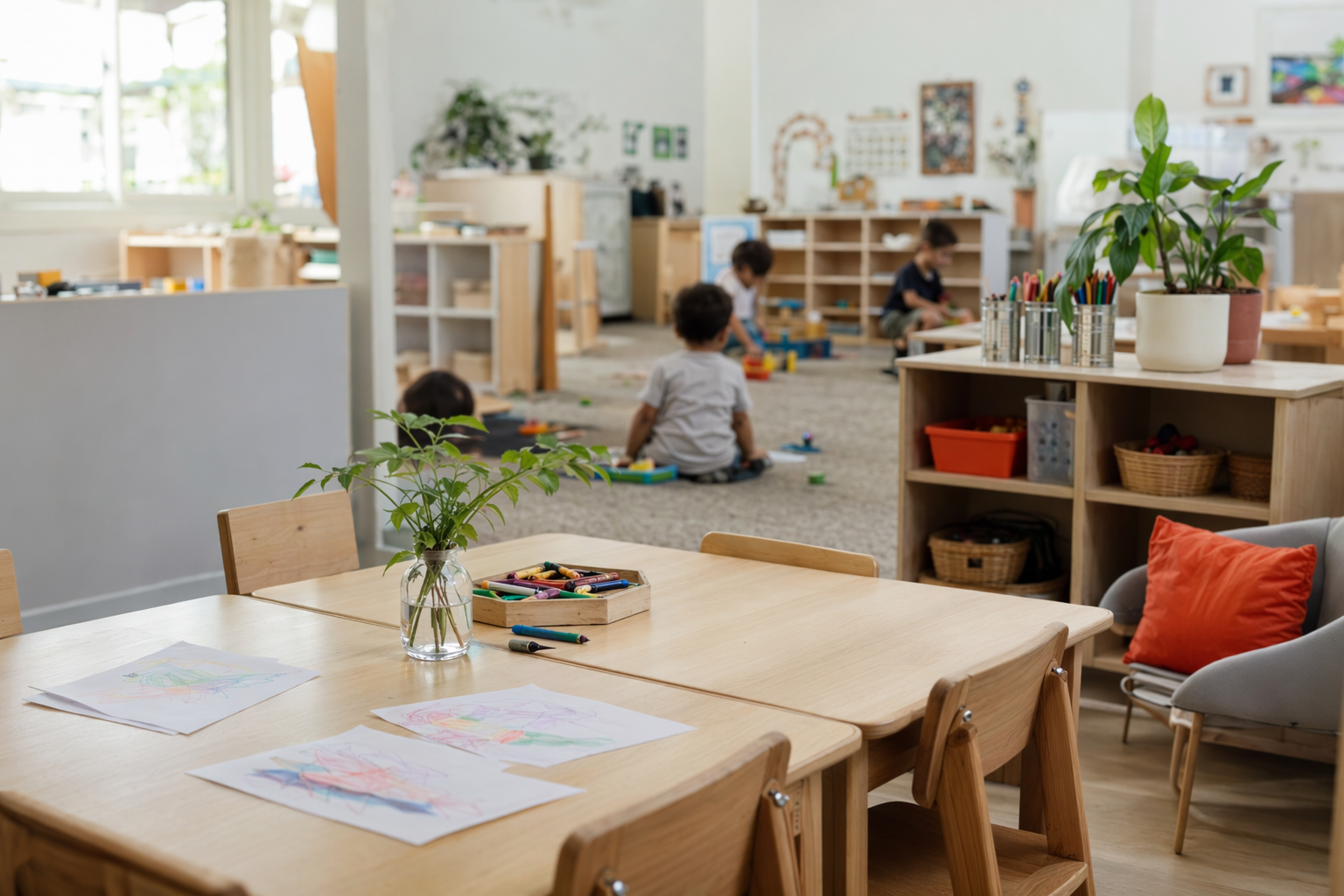
What children ages 4 to 5 often need
At this age, many children are learning to do more on their own. They may practice putting on a jacket, washing hands, using the bathroom, opening lunch items, and following 2-step directions. They are also building skills they will use in kindergarten, like listening in a group, taking turns, asking for help, and staying with an activity a little longer.
Pre-K is not only about letters and numbers. A strong program also helps with social and emotional growth. That means learning how to join play, calm down after getting upset, solve small problems, and use words instead of hitting or yelling.
Many families ask if their child needs to read before kindergarten. Usually, no. Most children do not need to read yet. More helpful skills are recognizing some letters, hearing sounds in words, counting small groups, speaking in full sentences, and feeling comfortable in a classroom routine.
If your family speaks another language at home, that is a strength. Your child can learn English and keep the home language too. You can read more in keeping your home language and our guide for immigrant families choosing preschool.
- Look for growth in self-help, language, play, and confidence, not only worksheets
- It is normal if children this age still need reminders, movement breaks, and extra reassurance
What a good Pre-K program can look like

A good Pre-K day usually has a clear routine. Children often have time for circle or group meeting, story time, art, outdoor play, music or movement, free play, meals, and rest or quiet time if the program is longer. Teachers may introduce early math and reading ideas through games, songs, books, and hands-on activities.
There is no single best style for every child. Some families like a play-based preschool where children learn through pretend play, blocks, art, and conversation. Others prefer a program with a more structured academic routine. Some families want a bilingual preschool or a public option like Head Start or public Pre-K.
Public and private Pre-K are both common. Public Pre-K is often free or low cost, but it depends on your city, school district, income rules, and available seats. Private Pre-K may have more schedule options, but tuition can be much higher. For many families, the best choice is the one that fits your budget, work hours, language needs, and your child's personality.
If you want help comparing choices, Cubby Road can match you for free based on what you are looking for. We are a free guide service for families. We do not run programs or decide admissions.
- Ask whether the program is full-day, part-day, part-time, or full-time
- Ask how teachers support children who are shy, very active, or still learning English
Ratios, licensing, and safety questions to ask
One important topic is the teacher-child ratio. Ratio means how many children one adult is responsible for. In general, lower ratios can mean more attention for each child, but rules depend on the state and the age group. Group size matters too. A classroom with fewer children may feel calmer for some kids. See understanding teacher-child ratios for a simple guide.
You should also ask about licensing. A state license means the program has met basic state rules, but it does not mean every program is the same quality. Always verify the license yourself. You can use our guide on how to check a preschool license. It is smart to visit in person before you make a decision.
During a tour, ask concrete questions. For example: How are children supervised outside? What happens if a child gets hurt? How do bathroom breaks work? How do teachers handle biting, hitting, or big feelings? How are pickup and drop-off checked? You can bring our preschool tour checklist or questions to ask on a tour.
For health rules, ask what papers are needed before a child can start. Some programs require immunization records or exemption forms, depending on state law. Our guide to preschool immunization rules can help you understand what to expect.
- Always verify the state license yourself
- Visit in person and watch how teachers talk to children
- Ask how many adults are in the room at different times of day
How to tell if a Pre-K is a good fit for your family
Fit means more than a nice classroom. Think about your real daily life. Can you get there on time? Does the schedule work with your job? Is before-care or after-care available if you need it? Is communication clear for your language needs? A program that looks wonderful but does not work for your family may create stress every day.
While you visit, notice how the room feels. Are children busy and engaged? Do teachers get down to children's eye level? Are there books, toys, art, and places to move? Do children seem afraid, or do they seem comfortable asking for help? One visit will not tell you everything, but it can show a lot.
It also helps to ask how the program supports the move to kindergarten. Some programs help children practice classroom routines, short group lessons, early writing, and problem-solving. Others work closely with local elementary schools. If your child has never been in a group program before, ask how they help with a slow adjustment.
If cost is a big concern, you are not alone. Some public programs are free, and some families can get help paying for private care. Start with help paying for preschool and costs. If you want a simpler starting point, you can get matched, free.
- Choose a program that fits your schedule, budget, and transportation
- Ask how families and teachers communicate about daily updates and concerns
Common worries parents have before kindergarten
Many parents worry, "Is my child ready?" The truth is that readiness is not one perfect checklist. A child can still be ready for Pre-K or kindergarten even if they are shy, still learning English, or cannot do every task alone yet. What matters is steady growth and support. Our preschool readiness signs page can help you think through this.
Another common worry is separation. Some children cry at drop-off, especially at the start. This can be normal. Ask the program what their transition plan looks like and how they update parents. You can also prepare at home with simple routines and talk about what the day will look like. Our first day of preschool tips may help.
Parents also worry about finding a spot. In many areas, free and low-cost Pre-K fills up early. Waitlists are common. It helps to ask when applications open, what papers are needed, and whether there is a backup option. See how to apply to preschool and preschool waitlists explained.
You do not have to figure it out alone. Cubby Road is a free service that helps parents compare preschool and daycare options. We collect a parent or guardian's contact information and what they are looking for, then help match families to possible programs. Learn more about how it works.
- Apply early if you want public Pre-K or other lower-cost options
- Ask for a tour and trust what you see and hear in person
Common questions
Is Pre-K the same as preschool?
Sometimes people use the words the same way, but Pre-K usually means the program year right before kindergarten, often for ages 4 to 5.
Can my child go to Pre-K if they are still learning English?
Often yes. Ask how the program supports multilingual children and how teachers communicate with families in your preferred language.
Are there free Pre-K programs?
Sometimes. It depends on your city, school district, income rules, and available seats. Public Pre-K and Head Start may be free or low cost for some families.
How do I know if a program is safe and licensed?
Ask for the license information, verify it with the state yourself, and visit in person. Also ask about supervision, pickup rules, staff training, and emergency plans.