Montessori vs. Play-Based Preschool
Montessori and play-based preschool can both be good choices. The best fit depends on your child’s personality, your family schedule, and what each local program is really like.
A quick verdict
If your child likes order, repetition, and working on one activity for a long time, Montessori may feel like a good match. If your child learns best through pretend play, group games, songs, and teacher-led activities, a play-based program may fit better.
But the label does not tell the whole story. One Montessori school may feel calm and flexible, while another feels strict. One play-based classroom may be warm and organized, while another feels noisy or less structured. That is why it helps to tour in person and ask clear questions. You can use this guide with our preschool tour checklist and questions to ask on a tour.
If you want help finding programs that may fit your family, Cubby Road can get you matched, free. We are a free guide service. We do not run preschools or promise a spot.
- Montessori often focuses on independent work, routine, and special classroom materials.
- Play-based programs often focus on learning through play, social interaction, and teacher-guided exploration.
- A good visit matters more than a program label alone.
At a glance: Montessori vs. play-based
Here is the simple side-by-side view.
- Teaching style: Montessori often gives children long work periods and choice within a prepared classroom. Play-based programs often use centers, circle time, stories, art, music, outdoor play, and pretend play.
- Classroom feel: Montessori may look calm, neat, and quiet. Play-based rooms may look colorful, active, and social.
- Materials: Montessori uses hands-on learning materials designed for specific skills. Play-based programs use toys, blocks, dress-up, books, sensory bins, and art supplies.
- Teacher role: In Montessori, teachers often observe closely and guide children one by one. In play-based classrooms, teachers may join play more directly and lead group activities.
- Best for: Montessori may fit children who like routine and independent work. Play-based may fit children who learn through imagination, movement, and social play.
Both types can support language, early math, self-control, and social skills. If your child is still very young, it may also help to compare by age, like twos programs, preschool ages 3 to 4, or pre-K ages 4 to 5.
How the teaching method is different
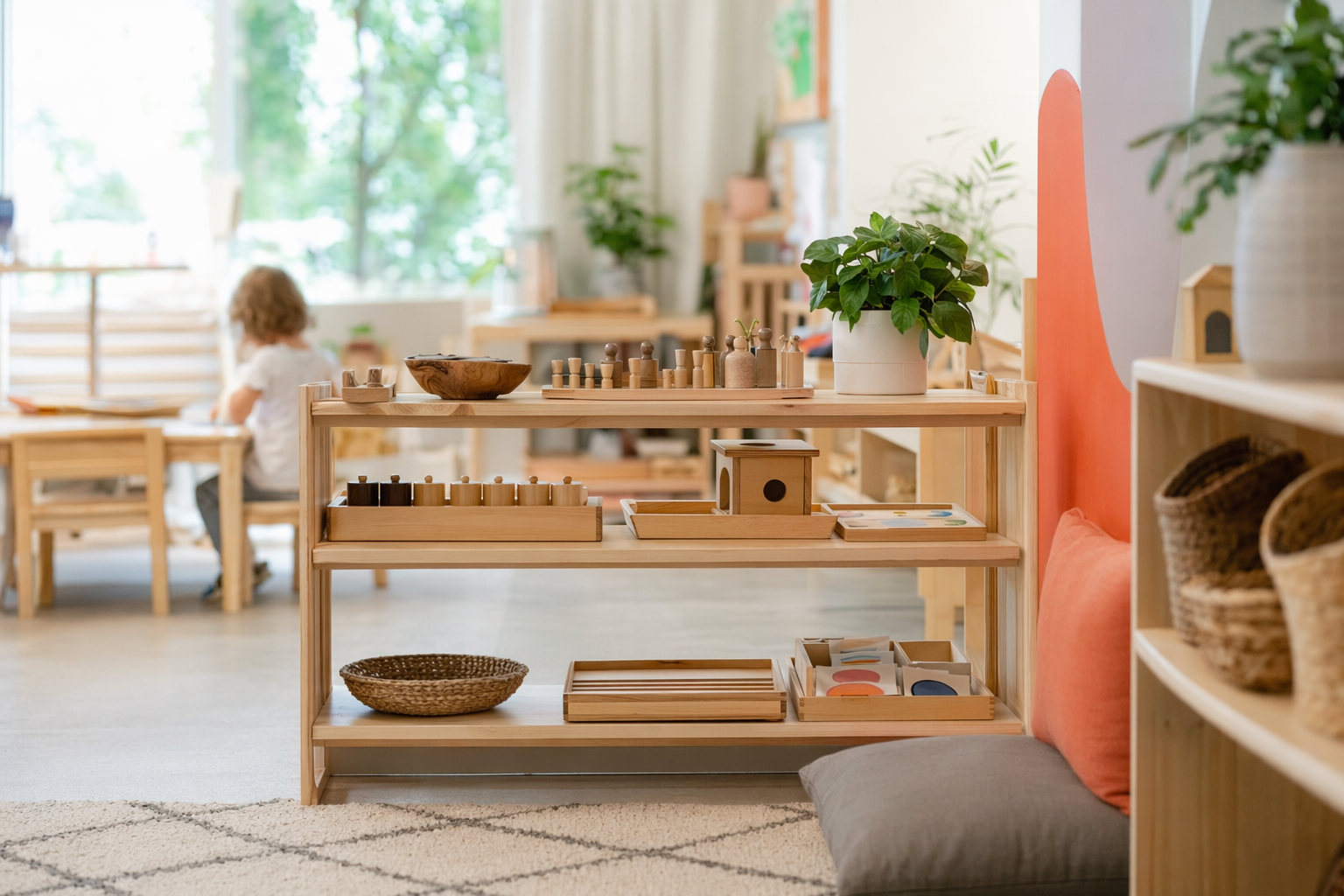
Montessori is based on the idea that children learn best by doing. The classroom is set up so children can choose from special materials and practice real skills again and again. A child might pour water, sort objects by size, trace letters, or work with counting beads. The teacher usually gives a lesson, then lets the child practice independently.
Play-based preschool uses play as the main way children learn. That can include building, pretend cooking, puppet play, painting, sand and water tables, songs, and games with other children. Teachers plan activities that support language, problem-solving, and social skills, but the learning often looks less formal.
Neither approach is automatically better. Some families worry Montessori has "less play," but many Montessori classrooms still include movement, outdoor time, and social learning. Some families think play-based means "just playing," but strong play-based programs are intentional. Teachers watch what children are learning and guide them toward new skills.
If home language matters to your family, ask how the program supports it. Some programs may also offer a bilingual setting. You can compare options like Montessori preschool, play-based preschool, and bilingual preschool.
What the day may look like
In a Montessori classroom, the day often includes a long uninterrupted work period. That means children may spend a large block of time choosing activities and working at their own pace. There may be less whole-group instruction. The room may feel peaceful, with children focused on different tasks.
In a play-based preschool, the day may move through several parts. For example: free play, circle time, snack, outdoor play, art, story time, lunch, and rest. Teachers may bring the class together more often for songs, shared reading, or group games.
For some children, a quieter room with predictable routines feels safe and comfortable. For others, more movement and social energy helps them learn. Watch your child during the tour if possible. Do they seem curious, relaxed, shy, excited, overwhelmed?
No matter the program type, ask practical questions too. Ask about hours, nap or rest time, outdoor time, meals, toilet learning expectations, and part-time versus full-time options. These daily details matter as much as teaching style. Our guides on part-time vs. full-time preschool and preschool vs. daycare can help.
Cost and availability
Cost can vary a lot. In many areas, Montessori programs are sometimes more expensive than play-based programs, especially private schools. But it depends on the city, schedule, and whether the program is nonprofit, faith-based, public, or private.
Play-based programs can also range widely in price. A private preschool may cost much more than a community-based program or a public pre-K option. Some families also look at Head Start or public pre-K if they want lower-cost options.
Ask for the full price, not just tuition. Check registration fees, supplies, meals, late pickup fees, and whether there is a waitlist. If budget matters, visit our costs page and help paying for preschool guide.
Availability also depends on your area. Some neighborhoods have many play-based options and very few Montessori schools. Others are the opposite. If you want a shorter list based on your budget, language, and schedule, you can get matched, free.
Which child may do well in each one
A child who may enjoy Montessori often likes repeating tasks, working carefully with their hands, and having a clear routine. They may enjoy choosing their own work and staying focused for longer stretches. Some children who do not like a lot of noise may feel good in this kind of space.
A child who may enjoy play-based preschool often likes imagination, movement, talking with other children, and learning through games or pretend play. They may respond well to teacher energy, songs, and group activities.
Still, children can surprise us. A very active child may love Montessori materials. A quiet child may blossom in dramatic play. Try not to choose only from your child’s current mood at home. Look for a classroom where teachers seem warm, respectful, and able to support different personalities.
If you are unsure, make a short list of what matters most:
1. My child needs a calm room or a more active room.
2. My family needs certain hours or location.
3. My budget has a limit.
4. I want support for home language or culture.
This can make the decision feel less overwhelming.
How to choose with confidence
Start with your child, but also think about the real-life fit for your family. The best program is not only about philosophy. It is also about commute, cost, schedule, teacher warmth, communication, and whether your child seems comfortable there.
When you tour, ask how teachers handle conflict, shyness, transitions, and different learning styles. Ask how much outdoor time children get. Ask how families receive updates. If your family speaks another language at home, ask how the program welcomes multilingual children. Our guides on how to choose a preschool, keeping your home language, and understanding teacher-child ratios may help.
Before you decide, verify the program's state license yourself and read the details carefully. You can use our guide on how to check a preschool license. Cubby Road is a free matching service, not a preschool or childcare provider, so families should always visit in person and make their own final choice.
If you want, we can help you compare local options and get matched, free.
Common questions
Is Montessori better than play-based preschool?
Not always. It depends on your child, the teacher, the classroom, and your family needs. A strong program in either style can be a good choice.
Does play-based preschool prepare children for kindergarten?
Yes, many do. Children can build language, social skills, self-control, and early math and literacy through guided play.
Is Montessori too strict for some children?
Sometimes it can feel very structured, but each program is different. Visit in person and see how teachers interact with children.
How can I find affordable Montessori or play-based programs near me?
Start by comparing tuition, hours, and fees. Look at public pre-K or community programs too. If you want help sorting options, Cubby Road can get you matched for free.